

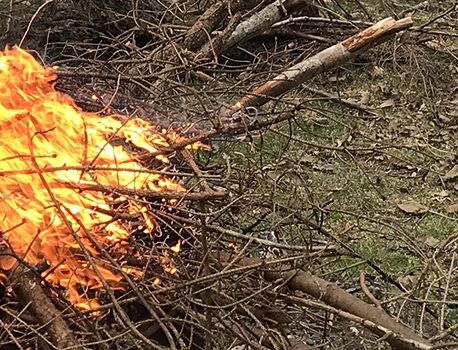
Wildland – Urban Interface Fires and us!
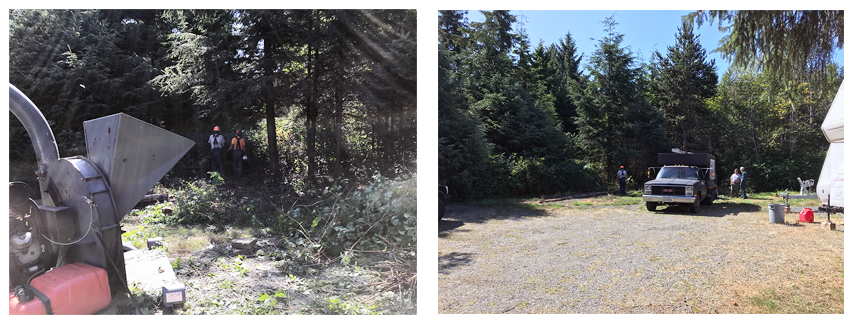
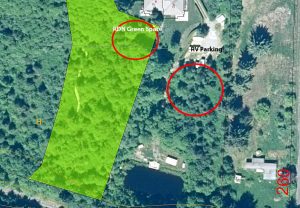
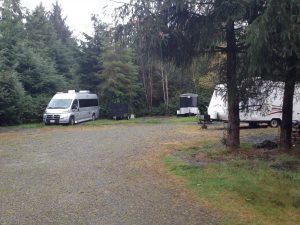
July 20, 2019, a group of volunteers, with the assistance of a tree removal company, reduced the fire fuel from around the RV parking area to lessen the risk of fire spread from the South East forested area abutting the parking area.
The “LLE Reality” is that fire spreading from your neighbour’s house, vehicles or local forests puts your home at risk. Regardless of the fire source, you as a homeowner can take steps to protect your property from fire exposures.
As we have seen in the last few years, wildland fires in the urban interface (WUI) have been increasing globally. As homeowners, and as a community, there are several steps we can take that will increase our fire safety preparedness against Wildland Fires.
Introduction:
Note: bold blue text is hyperlinked to information items on the internet.
- The FireSmart Canada and FireSmart BC programs have been adopted by the BC Fire Commissioner’s Office as the community guideline for WUI safety standards in British Columbia.
- The links included in this report are from the RDN and BC FireSmart Programs for those interested in doing some research.
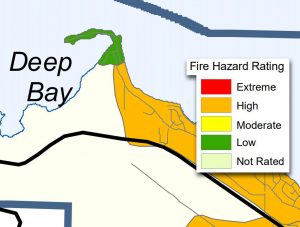
- It is important to know that we are in a High Risk area for WUI Fires. According to the RDN’s website: “If you reside in a ‘Red’ or ‘Orange’ zone, the RDN recommends you read the FireSmart Manual”.
- LLE is in an Orange Zone. Our buildings and landscaping are generally good on FireSmart evaluations. However, there are things that every one of us can do with little effort concerning our own homes and some of our treed areas to improve our safety rating. If any residents of LLE want to learn more about their homes and FireSmart, Ron Chamney (unit 21) is available to walk you around your home and outline possible mitigation practices.
- FYI: some insurance carriers will lower rates if a home is a part of a FireSmart Program.
Why FireSmart®?
FireSmart guidelines were originally developed to protect rural communities located on the interface of natural and residential areas that put them at risk from wildland fires. We have found that these principles are also a good way to reduce risk from fire exposure for any urban homes.
Forest and grassland wildfires are capable of spreading at an astonishing rate. Large wildfires can send embers two kilometres ahead of the fire front. A free burning fire can double in size in 30 seconds… rural fire departments are doing well if they have a response time of 15 to 20 minutes.
Get Ready
Properly preparing your home and community doesn’t guarantee that you won’t incur fire damage, but it does reduce the risk.
- Plan your escape first. If you do nothing else be prepared to leave at a moment’s notice. Whether from earthquake or forest fire, you need to have an escape plan including an evacuation kit (PDF).
- Make sure you have adequate insurance on your home and property. The Strata Corporation carries insurance on the Common Property and Limited Common Property, and Strata Owners should have Personal insurance coverage on their contents and Betterments. Many renters don’t realize that their possessions are not covered under their landlord’s fire insurance. Renters should always carry a “Tenant’s Package” insurance policy. For more on insurance visit our Budget and Insurance webpage.
- Site Preparation.
Site Preparation
Any kind of vegetation is combustible. Mature trees, shrubs, grass and even your woodpile can easily ignite and increase the chance of fire damaging your home and property. Managing the space around your home, storage areas and other structures is of utmost importance.
Priority Zones
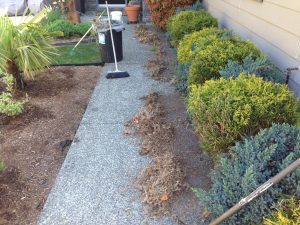
Priority Zones are the areas around each property that require unique vegetation management activities. Zone 1a (0-1.5 metres) is the non-combustible zone directly around the property where no ignitable fuel should be present. Zone 1 (1.5-10 metres) is the zone where the landscape should not permit wildfire to transfer to the home. Zone 2 (10-30 metres) is the zone where hazard is reduced primarily by thinning and pruning of trees, including our RV Storage Area. Zone 3 (30-100 metres) is the zone that influences how fire approaches the property, where fire breaks are necessary.
Do you have a “fuel free” zone around your house?
The space immediately surrounding your home is a priority zone. A fuel-free space will minimize fire spread and give firefighters a chance to save your home. A home without a fuel-free space can make firefighting difficult, if not impossible.
What to do?
- Remove flammable trees and shrubs, such as pine, cedar, spruce and juniper that are close to your home. Other species such as aspen, poplar and birch are less flammable.
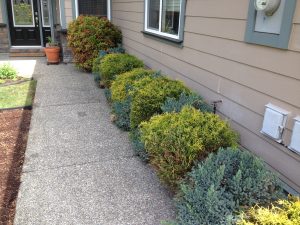
It is best to replace these cedar and juniper bushes with fire resistant shrubs or with decorative rock. - Remove deadfall and woodpiles, and store firewood well away from your house and vehicles.
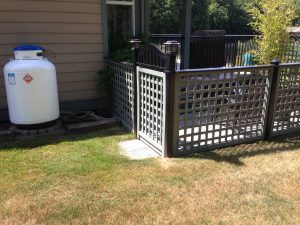
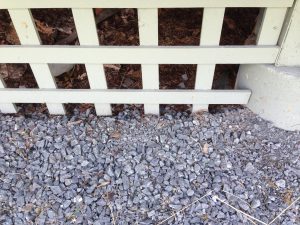
- Keep your grass mowed and watered, and if you can, a crushed rock at the base of your house and deck prevents direct flame contact at ground level.
- Leaves, pine and spruce needles are fuel. Keep them off your roof, out of your gutters, off your decks and away from the foundation of your house.
- Prune your shrubs, removing all dead branches.
- De-limb large trees two to three metres from the ground.
- If branches are hanging over your roof or touching your house, trim them back.
- Talk to your neighbours, help them minimize their risks, which are also yours.
- Using fire resistant plants in landscaping will also reduce fire risk.
Plants to avoid:
- Pampas Grass
- Broom
- Holly
- Juniper
- Fountain Grass
- Colorado Spruce
- Pine
- Yew
- Cedar
More information:
- B.C. FireSmart begins at home (PDF)
- FireSmart Guide to Landscaping (PDF)
- Master Gardeners Assoc. of B.C.: Fire Smart Landscaping in Drought Interface Areas
 |
 |
 |
 |
This page was compiled by Ron Chamney (unit 21) who was a director for Partners in Protection and was responsible for the Wildland Urban Fire Interface (WUI) Portfolio for the City of Calgary Fire Department. Ron was also a WUI consultant on Salt Spring Island for several years and sat as a council member for the Salt Spring Island Fire Department.